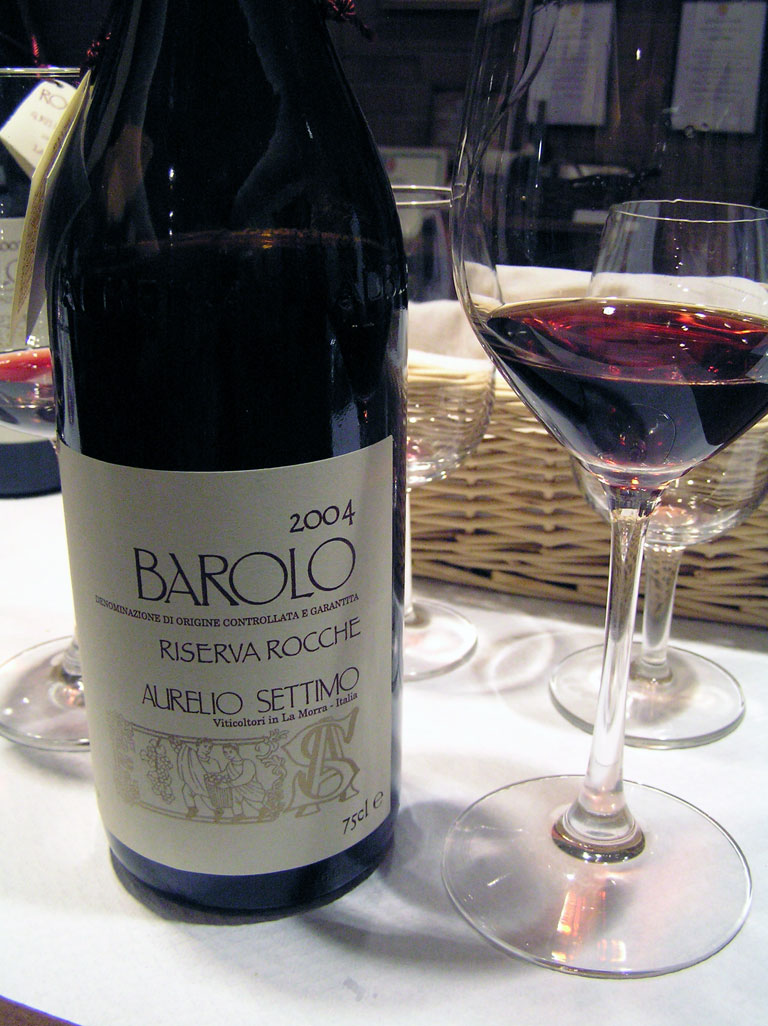
Vinmøte Are 16.2.12:
Myk med fjøskant. Brettanomyces så det holder. Flat, moden og innsmigrende. Blir for bløt. En eldre vin som nok skulle vært drukket på et tidligere tidspunkt. Trodde jeg hadde drukket endel Bordeaux, men denne har jeg aldri vært borti før. 79 poeng.
Fra wineanorak.com vedr. brettanomyces:
Brettanomyces is a common defect in wine, but controversy surrounds
the subject.
When
Brian Fletcher, chief winemaker at Calatrasi in Sicily, found out I was writing
this feature, he couriered me a bottle of red wine. Labelled simply as
‘Brettanomyces’, it was a sample from Puglia that Brian had recently been sent
by a producer there. So I opened it and poured a glass. Immediately, I got a
whiff of animal sheds with some savoury, cheesy character. The palate was
similarly animal-like, with a thin metallic edge. Very rustic. Not undrinkable,
but getting there, and a textbook example of a Brettanomyces-infected
wine.
For
those scratching their head wondering what on earth Brettanomyces is, let
me explain. It’s a yeast – that is a unicellular type of fungus, not a bacterium
– that is a common spoilage organism in winemaking. The goal of this article is
to assess how much of a problem it is, what its effects are and how it can be
prevented. Finally, I’ll look at the controversial issue of whether low levels
of ‘brett’, as it is widely known, can ever be a good thing, adding complexity
to certain sorts of wines.
The
microbiology of wine production is a complex business, and it is beyond the
scope of this feature to go into too much detail. But let me try to give you a
feel for the concepts involved. Think of the plants growing on the slopes up the
side of a mountain. At the bottom there are hundreds of different types, with
the pattern of vegetation changing and progressively decreasing in diversity
with altitude (and a corresponding drop in temperature). It’s a bit like that
with fermenting wine, except that here the variation is temporal and not spatial
-- it is a gradually changing environment for yeasts. In freshly crushed grape
must there are many different yeast species present, including those normally
found on grapes. These rapidly disappear as fermentation starts and alcohol
rises. The environment becomes more and more inhospitable, and after a while the
only significant yeast species present is Saccharomyces cerevisiae. As
alcoholic fermentation finishes, the S. cerevisiae population decreases
significantly. If by this stage the sugar and nutrient supplies are exhausted,
that’s the end of things and the wine is stable. But if they aren’t, this leaves
the way open for spoilage bugs to develop; brett is one of the worst culprits
here.
What
does bretty wine taste and smell like?Volatile phenols and fatty acids
are the key molecules responsible for the olfactory defects in wines affected by
brettanomyces. According to Peter Godden, of the Australian Wine Research
Institute, ‘The anecdotal dogma in this area is that 4-ethyl-phenol, isovaleric
acid and 4-ethyl-guiacol are the key molecules, in order of sensory importance’.
But he adds that he has seen variations in brett character in different bottles
of the same wine. 4-ethy-phenol is the most prominent molecule in bretty wines,
giving aromas of stables, barnyards and sweaty saddles (apparently, but I must
admit to never having smelled one). Its presence in wine is an almost certain
indicator of a brett infection, and this is what most diagnostic labs test for
to indicate the presence of brett. 4-ethyl-guiacol is a little more appealing,
known for its smoky, spicy aromas. Isovaleric acid, a volatile fatty acid, is
known for its rancid, horsey aroma, and as yet there is no analytical technique
that picks it out: in gas chromatography/mass spectrometry (GCMS) another
compound elutes at the same time, which masks it. Godden emphasizes that this is
a complex area of study: ‘There is not much of a relationship between overall
brett character and 4-ethyl-phenol levels, and there are synergistic effects
between the three most important sensory compounds.’
As with
other volatile odorants, people differ widely in their sensitivity to these
molecules, and each individual shows a range of different thresholds (for
example, the threshold for detecting an odorant differs from the threshold for
recognition of the same odorant). Godden suggests that a useful sensory
threshold to use for 4-ethyl-phenol is 420 micrograms/litre. At this
concentration and beyond, a wine will typically be noticeably bretty. Below this
concentration, the character of the wine may be changed but people won’t, on
average, recognize that this is due to 4-ethyl-phenol. Because the threshold for
4-ethyl-phenol drops when 4-ethyl guiacol is also present -- and in
brett-infected wine they always occur together in a ratio of about 10:1 -- this
threshold is calculated for a 10:1 mixture of 4-ethyl-phenol and
4-ethyl-guiacol.
How
common is brett?The short answer is that brett is highly prevalent, and
represents an increasing problem, even in new world countries such as Australia.
‘We first started raising this as an issue four years ago’, says Peter Godden of
the Australian Wine Research Institute, ‘ and on 1st July we’re planning to
start a major project looking at Brettanomyces’. As a scientist, he feels that for such an
important issue, this is a relatively under-researched area. ‘There is a lot of
conjecture: anecdotal observations are very important but we have to be careful
with them because they can skew people’s opinions.’
Although
brett can and does occur with whites, it is predominantly a red wine problem.
This is because red wines are far higher in polyphenol content, and generally
have a higher pH, both factors which encourage brett development for reasons
which outlined below.
With
rising standards of winemaking worldwide, I was a little surprised to hear that
brett is on the increase. There seem to be two contributing factors to this
rise. First, there is the current trend for ‘natural’ wines. ‘Minimalist
winemaking is a perfect recipe for bretty wine’, says Godden. ‘It’s probable
that the increase in brett in the 1990s can be traced back to the winemaking fad
to stop adding sulphur at crushing’. Indeed, the most effective way of
preventing brett is to maintain an adequate concentration of free sulphur
dioxide (SO2). Randall Grahm of California’s Bonny Doon comments, ‘If
one is ideologically committed to no sulfitage at the crusher, this increases
one’s chances of brett dramatically. Likewise, if one uses low or no
SO2 in the elevage of the wines, this greatly increases the risk of
brett’. Preliminary studies by the AWRI
show that there is a lot of genetic variability among Brettanomyces strains.
This makes the correct use of sulphur even more important. If it is added in
small, regular doses, winemakers might unintentionally be selecting for
SO2-resistant strains of brettanomyces, or to put it another way
super-brett strains that are then even harder to eliminate. So timing and
magnitude of SO2 additions are important as well as the actual
concentrations: the best way to get rid of brett seems to be large
SO2 additions at strategic intervals.
Second,
there is the move towards ‘international’ styles of red wine, made in an
extracted style from super-ripe grapes. ‘These are higher in pH and are richer
in polyphenols’, explains Grahm. pH is important, likely through its role in
modulating the effectiveness of SO2 additions. The higher the pH, the
less effective SO2 is and the more likely that brettanomyces will
grow. Polyphenol content is important because these compounds are the precursors
for the volatile phenols largely responsible for bretty odours.
A vital
risk factor is the presence of residual sugars and nitrogen sources left over at
the end of fermentation. With the gradual rise in alcohol levels over the last
20 years, the last bit of sugar commonly isn’t being metabolised by the yeast.
Godden suggests that one solution is to try to keep the wines warm while they
are being pressed. As well as sugar, a nitrogen source is needed for brett to
grow. In fermenting wine, S. cerevisiae uses amino acids as a nitrogen
source. A recent winemaking trend has been to add diammonium phosphate (DAP) as
a supplementary nitrogen source for yeasts, to reduce the risk of stuck
fermentations. However, fewer than half of musts need actually use this
additive, and DAP has been described as ‘junk food’ for yeasts – they’ll use
this in preference to amino acids, leaving them in the wine as a nitrogen source
that encourages the growth of brett.
Old
barrels are frequently touted as the main culprits of brett, but Randall Grahm
adds, ‘The received wisdom about old barrels, old foudres being the great
repository of brett I think is somewhat mythical and simplistic: dirty barrels,
dirty wines, q.e.d.’ Grahm adds that, ‘Since brett is largely ubiquitous, a
rampant brett infection is often more of a function of a large inoculum coming
in on the grapes.
To gauge
the extent of the current brett problem, Godden and his colleagues recently
completed a survey of Cabernet Sauvignon wines in five major regions of
Australia. He’s unable to give the actual results, because these are sensitive,
and he thinks that the samples size, around 170 bottles, isn’t big enough to
allow him to draw a firm conclusion. ‘But if a consumer were to go out and buy a
mixed dozen,’ he told me, ‘several bottles would have more than 425
micrograms/litre 4-ethyl-phenol: if you drink wine regularly, you’ll have come
across a lot of brett.’
Before
the 1990s, brett was common in Bordeaux. The wines of several well known classed
growths were well known for their distinctive ‘stink’. This was almost certainly
because of brett infections, but without the data – and most properties would
understandably be reluctant to own up to this – I can’t name any names. Since
the early 1990s, however, brett has become much rarer, and this is mainly due to
the groundbreaking work of Dr Pascal Chatonnet. In 1993 Chatonnet carried out a
survey of 100 French wines, and showed that a staggering third of those tested
had levels of volatile phenols above the perception threshold.
The
conclusion seems to be that brettanomyces is widespread, and virtually every
barrel of red wine has the potential to go bretty. Create the right environment
for it, and you’ll have a brett infection. Thus the key objective for winemakers
isn’t to create a sterile winery, which will never happen, but to make sure that
their barrels aren’t a receptive environment for brett to grow in.
Brett,
Mourvèdre or terroir? A case study
Brettanomyces is a favoured discussion
topic among wine geeks, who’ll often enter into lengthy discussions about
whether a certain wine is bretty or not. One wine that keeps cropping up in this
context is Château de Beaucastel, the highly regarded Châteauneuf du Pape
estate. To some, the distinctive earthy, slightly animal-like characteristics of
many past vintages of Beaucastel have reflected an expression of terroir, or
even the higher than average Mourvèdre content of this wine. Others think it’s
because of brett infection. Who is right?
Back in
early 1998, Charles Collins, an American wine collector, became so frustrated
with the endless wine geek discussions about Beaucastel and brett that he
decided to find out for himself. He got hold of some scientific papers on the
subject and read up about the subject. ‘I realised that the presence of the
compound 4-ethyl-phenol is a virtually certain indicator of the presence of a
brett infection’, recalls Collins. He contacted a lab who does testing for
4-ethyl-phenol and sent them some Beaucastel from his cellar. ‘I opted to test
two of the most famous vintages, the 1989 and 1990’, Collins told me. ‘These
wines are supposed to represent what great Beaucastel is all about.’ He prepared
the samples for shipment in sterilized glass 375 ml bottles and used fresh corks
to seal them. The wines were labelled so that the lab had no clue as to their
identity.
The
results? According to Collins, ‘they showed indisputable evidence that
significant brett infections occurred in both the 1989 and 1990 vintages of
Beaucastel.’ Microscan and plating tests showed only small amounts of mostly
dead brett cells, but the 4-ethyl-phenol levels were 897 micrograms/litre for
the 1989 and a whopping 3330 micrograms/litre for the 1990. Collins concludes,
‘if you personally like the smell of brett, then none of this should you
dissuade you from buying and cellaring Beaucastel. You should, however, give up
the myth that the odd flavours are due to terroir—they aren’t.’ I would add that
while I’ve detected what I’ve always assumed, in the absence of data, to be high
levels of brett in some vintages of Beaucastel—the 1991 springs to mind as one
of the brettiest wines I’ve ever encountered—in vintages since the mid-1990s I
haven’t encountered any. But, of course, unlike Collins, I haven’t done the lab
tests that would be needed to verify this.
‘We
believe in natural winegrowing and winemaking, and I must admit that this has
led us to have serious debates with scientists spanning three generations’,
responds Beaucastel’s Marc Perrin. ‘In the mid-1950s, for instance, our
grandfather, Jacques Perrin, decided to stop using chemical pesticides or
herbicides on the vineyard. At that time, when scientists were recommending the
use of such chemicals for productivity or lobby reasons, that seemed crazy and
impossible. Now, it seems that people have changed their mind and more and more
vineyards are turning organic. I could quote many more examples of opposition
between a scientific vision of wine and our traditional/terroir oriented
philosophy of wine, and the subject of Brettanomyces is just one more’,
he explained. ‘There are certainly some Brettanomyces in every natural
wine, because Brettanomyces is not a spoilage yeast (as many people
think) but one of the yeasts that exist in winemaking. Some grapes, like
Mourvèdre, are richer in 4-ethyl-phenol 'precursors' than others and we have a
high percentage of these grapes in our vineyard. Of course, you can kill all
natural yeasts, then use industrial yeast to start the fermentation, saturate
the wine with SO2 and then strongly filtrate your wine. There will
then be no remaining yeasts, but also no taste and no typicity. That is the
difference between natural wine and industrial wine, between craftsmanship and
mass-market product.’
Adding
complexity?Beaucastel has been widely acknowledged as one of the world’s
great wines over recent decades. Yet from Collins’ limited sampling coupled with
individual tasters’ experiences, it seems likely that some of the most
successful past vintages of this wines have been marked by high levels of brett.
This leads us to a critical—and fascinating—question: is brett ever a good
thing? In small quantities, can it have a positive influence on certain styles
of red wines?
If
surveys such as those of Chatonnet and Godden are to be extrapolated across all
wines, it is likely that many wines with above-threshold levels of brett have
received critical acclaim and have been enjoyed by countless consumers. This
leads to the conclusion that while most people won’t enjoy a really stinky wine,
low levels of brett might not be a problem—indeed, a bit of brett might even add
complexity to certain robust styles of wines.
Bob
Cartwright, senior winemaker of Leeuwin Estate in Western Australia’s Margaret
River region, acknowledges that ‘a lot of winemakers like to have some as a
complexing character—the question is how much is too much?’. Randall Grahm is
undecided. ‘I suppose this could theoretically add some complexity to a wine.
The problem is that for now, this is not easily controllable’.
Pascal
Chatonnet is opposed. He sees the problem of brett as a lack of fruit and loss
of typicity. ‘If brett is able to grow in all the red wines of the planet—and
this is the case—then all the wines will have the same odour, which is a pity’.
Godden
is another who isn’t keen on the idea. ‘My view is that if we could
eliminate it altogether we would’, but he stressed that he wouldn't go so far as
to say it is always negative. Godden cites some results from the PhD thesis of
Phil Spillman, now winemaker with Villa Maria in New Zealand. In one study
Spillman did some sensory analyses. The strongest relationship he found was an
inverse correlation between levels of 4-ethyl-phenol and wine preferences. ‘I’ve
not been able to find an Aussie winemaker who doesn’t find 100 micrograms/litre
negative’, adds Godden. ‘In tests where brett character has been added, it has a
severe adverse effect on the palate. 4-ethyl-guiacol can be interesting and
complexing and doesn’t have the negative palate effect of 4-ethyl-phenol, but
with brett infection you get 10 times as much 4-ethyl-phenol than
4-ethyl-guiacol.’
Randall
Grahm has an novel suggestion, though: ‘It would be very interesting if we could
isolate a strain of brett that worked in wine, depleting nutrients but producing
very low levels of 4-ethyl phenol. In this way, one could inoculate one’s wine
with brett, much the same way as one inoculates one’s wine with malolactic
bacteria, thus depleting nutrients and rendering the wine safe from further
microbial degradation.’ Now there’s a project for the microbiologists. Any
takers?